
The gears of war e-day raam storyline puts the Locust Horde's most feared commander front and center, and understanding his role changes how you read the entire Emergence Day conflict. This article breaks down RAAM's E-Day appearance, Skorge's parallel rise, and how their histories connect to Delta Squad's desperate fight through Kalona. You'll also get a ranked breakdown of the full character roster and unlock paths for multiplayer.
Emergence Day wasn't a random attack — it was a coordinated extinction event, and RAAM was the hammer that swung first. While Marcus Fenix and Dom Santiago were still scrambling to understand what was happening, RAAM was already directing the Locust push that would level cities and force humanity to the brink. The gears of war e-day raam narrative gives you the villain's perspective, which makes the campaign's three brutal days in Kalona hit much harder when you know who's pulling the strings.
RAAM's Role in the E-Day Invasion
RAAM isn't just a boss fight waiting at the end of a level — he's the strategic brain behind the Locust Horde's surface assault. During E-Day, he commanded the initial wave that erupted from the ground, coordinating Drones, Wretches, and the massive Corpsers that collapsed city blocks. The official Gears of War website describes the prequel as set 14 years before the original game, which means you're seeing RAAM at the peak of his tactical power, not the seasoned warlord from the first title.
What makes gears of war e-day raam so compelling is the difference in how he operates here compared to the original trilogy. In E-Day, he's not just standing in a command center issuing orders — he's on the front lines, personally leading the push through Kalona's streets. Community reports from the open beta suggest his campaign encounters emphasize his Kryll shield mechanic, forcing you to manage light sources and environmental hazards while dealing with his heavy firepower.
The campaign structure gives you three distinct encounters with RAAM, each escalating in intensity: the first is a mid-level skirmish on the outskirts of Halvo Bay where he wields only the Kryll swarm, forcing you to focus on crowd control while chipping away at his health bar; the second pits you against him in the tight, cover-dense streets of the city center, where he now combines his Troika-mounted fire with Kryll summons, demanding you break line-of-sight to avoid the instant-down damage; and the finale is a full-on boss arena fight where RAAM abandons the Troika for his signature Serrated Knife and enters a berserker state, increasing his movement speed by roughly 30% and forcing you to use the environment's explosive barrels to stagger him. This three-tiered design mirrors the classic Gears of War 1 final boss fight but adds a modern twist: each phase tests a different core skill—positioning, target prioritization, and finally, aggressive DPS racing against his enrage timer.
-
First encounter — a hit-and-run skirmish where he retreats after taking enough damage, teaching you his attack patterns
-
Second encounter — a mid-campaign fight in a collapsed subway tunnel where the Kryll swarm becomes a constant threat
-
Final confrontation — the full boss fight that tests everything you've learned, including his Troika cannon phase
His presence reshapes how you approach the campaign because every encounter with RAAM forces you to manage two threats simultaneously. The Kryll swarm denies you cover, while his command of the Locust units means you can't just tunnel-vision on him. This dual-threat design is what makes the gears of war e-day raam campaign encounters feel genuinely different from the standard Locust firefights.
How RAAM Compares to His Original Trilogy Version
The E-Day version of RAAM is younger, faster, and arguably more dangerous because he hasn't developed the arrogance that would later cost him. Players who remember the original Gears of War boss fight will notice several key differences:
| Attribute | E-Day RAAM | Original Gears RAAM |
|---|---|---|
| Kryll shield | Active but less dense | Fully developed swarm |
| Primary weapon | Breechshot | Troika cannon |
| Movement speed | Faster, more aggressive | Slower, methodical |
| Command style | Front-line leader | Strategic overseer |
| Health pool | Lower but more phases | Single massive pool |
The Breechshot is a new weapon introduced in E-Day, and RAAM wielding it makes his encounters feel more dynamic. He'll close distance quickly, forcing you to reposition constantly, whereas the original RAAM was more of a stationary turret fight. This shift in design philosophy reflects how The Coalition rebuilt the movement system for E-Day, which the Steam store page confirms includes a rebuilt movement system built on Unreal Engine 5.
Skorge's Parallel Rise and Connection to RAAM
While gears of war e-day raam dominates the campaign narrative, Skorge operates in the shadows, and his E-Day story is just as important for understanding the Locust hierarchy. Skorge is the Reverend of the Hollow, a religious zealot who leads the Kantus priests and commands the Theron Guards. His role during E-Day was less about direct combat and more about maintaining the Horde's fanatical discipline through the invasion's chaos.
The relationship between RAAM and Skorge is fascinating because they represent two different types of power within the Locust Horde. RAAM is the military commander who earns loyalty through results, while Skorge is the spiritual leader who commands devotion through faith. Together, they form a leadership structure that keeps the Horde unified — RAAM handles the strategy, Skorge handles the morale and the Theron Guard elite units.
Skorge's E-Day appearances focus on his role as a battlefield coordinator rather than a direct combatant. He's often seen in the background of major set pieces, directing Kantus priests who are using their sonic amplification to buff nearby Locust units. This support role makes him a different kind of threat than RAAM — while RAAM forces you to adapt your positioning, Skorge's presence means you also need to prioritize targets or face an endless wave of buffed enemies.
Skorge's Unique Abilities and Fighting Style
When Skorge does enter combat, his fighting style is a stark contrast to RAAM's heavy-weapons approach. He's a dual-wielding specialist who favors speed and precision over raw power: his twin Kryll-infused Blades allow him to close distance in a flash, chaining quick slashes that interrupt reloads and lock Delta Squad members into stun-lock loops. Unlike RAAM's methodical, shield-forward pressure, Skorge's dodge-heavy kit punishes players who rely on cover-based stalemates—his Agile Rush ability lets him vault over barricades and force melee range, making him the deadliest counter to the Lancer-spam tactics most squads default to in Gears of War: E-Day.
-
Dual Kali sticks — his signature weapons that allow rapid close-quarters strikes
-
Sonic scream — a short-range area attack that staggers players and breaks their aim
-
Wall climbing — Skorge can scale vertical surfaces to reposition for ambushes
-
Theron Guard summons — he can call in elite reinforcements during extended fights
The gears of war e-day skorge encounters in multiplayer are particularly notable because his smaller hitbox and faster movement make him a difficult target. Community testing during the beta suggested that Skorge players have a slight advantage in close-quarters maps because his animations are harder to read than standard Locust characters. This has led to debates about whether he's the best multiplayer character for aggressive playstyles.
Delta Squad History and Their E-Day Mission
The gears of war e-day delta squad history is the emotional core of the campaign, and it's a very different story from what veterans of the series might expect. Marcus Fenix and Dom Santiago aren't the battle-hardened veterans of the original trilogy — they're younger, less experienced, and still processing the end of the Pendulum Wars. The Wikipedia entry for E-Day confirms they're joined by Mags Carter and Lucas Reyes to form Bravo Squad, with Tai Kaliso and Raven pilot Gil Gettner appearing throughout the story.
The Delta Squad history in E-Day is really about formation — how these characters came together under the worst possible circumstances. Marcus is still carrying the weight of his father's disappearance and his own court-martial, while Dom is trying to find Maria, his wife who was separated during the chaos. These personal stakes make the squad's fight through Kalona feel more desperate than the larger-than-life conflicts of later games.
Bravo Squad’s E-Day mission shifts from standard COG garrison protocols to a desperate, improvised retreat as the Locust Horde’s initial emergence overwhelms the Pendulum Wars-era defenses; their objective evolves from holding the frontline to extracting key personnel and intel, forcing them to navigate the collapsing urban grid while engaging swarms of Drones and Boomers, a tactical pivot that directly sets the stage for the brutal, close-quarters encounters that define the Gears of War: E-Day prequel narrative.
-
Initial response — securing the city's outer perimeter and evacuating civilians
-
Underground incursion — following Locust emergence tunnels to find their source
-
Kalona evacuation — protecting the evacuation convoy while RAAM's forces close in
-
Last stand — holding a defensive position to buy time for the evacuation
What makes this Delta Squad history so compelling is that you're watching the team fail in real time. They don't save the day — E-Day is a catastrophic loss for humanity. The campaign's power comes from watching these characters make impossible choices and sacrifice everything just to survive. This is the origin story that explains why the Marcus and Dom of the original Gears of War are so broken and determined.
Key Delta Squad Members and Their Fates
| Character | Role in E-Day | Post-E-Day Status |
|---|---|---|
| Marcus Fenix | Squad leader, frontline fighter | Imprisoned, later returns in Gears 1 |
| Dominic Santiago | Close-range specialist | Searches for Maria, joins Marcus later |
| Mags Carter | Heavy weapons support | Survives, appears in later conflicts |
| Lucas Reyes | Recon and marksman | Survives, continues military service |
| Tai Kaliso | Melee specialist | Survives E-Day, appears in Gears 2 |
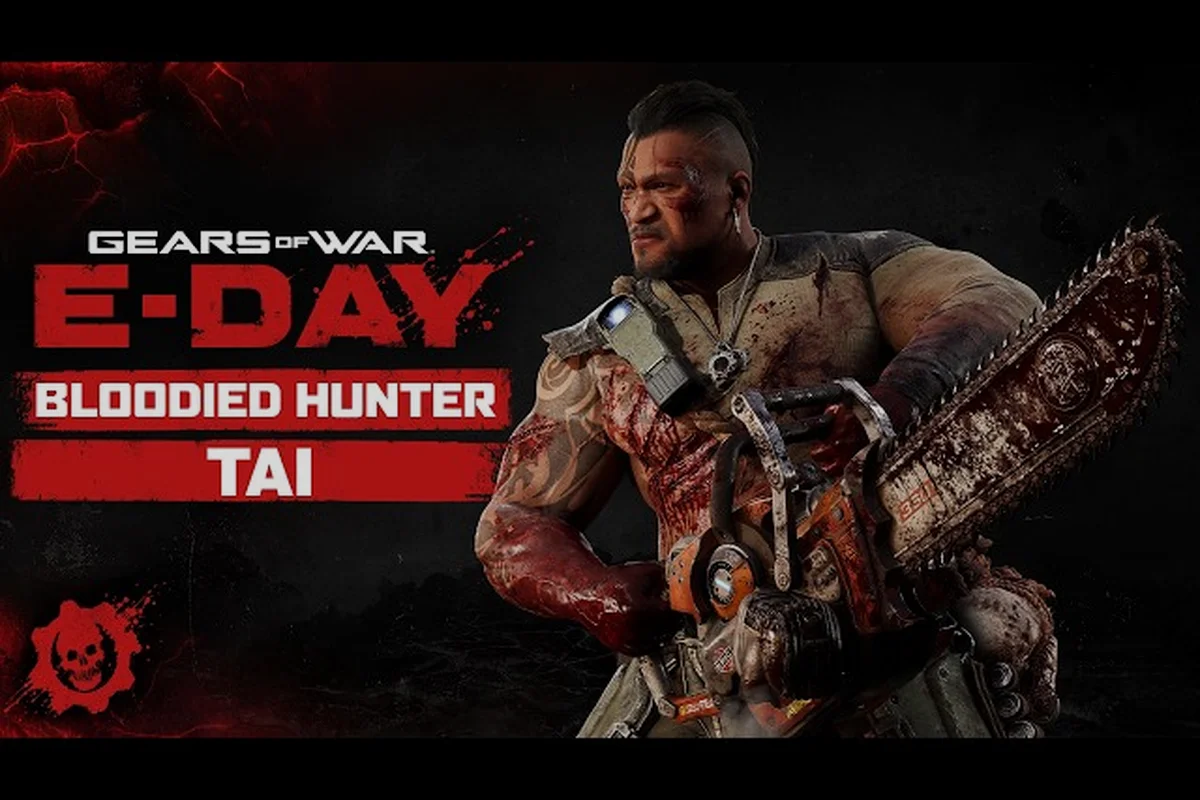
The Tai Kaliso connection is particularly interesting because his E-Day appearance establishes his bond with Marcus and Dom that pays off in Gears of War 2. Community discussions on the r/GearsOfWar subreddit have noted that E-Day retroactively makes Tai's death in the second game hit harder, because you've now seen him fight alongside Marcus during humanity's darkest hour.
Ranked Character List for E-Day Multiplayer
The gears of war e-day character list ranked below reflects community consensus from the open beta testing period (August 6-10, 2026) and may shift with post-launch balance patches. This ranking considers hitbox size, animation readability, and how well each character's visual design blends with different map environments.
| Tier | Character | Strengths | Weaknesses |
|---|---|---|---|
| S | RAAM | Intimidating presence, Kryll effects, large intimidation factor | Larger hitbox makes him easier to hit |
| S | Skorge | Small hitbox, fast animations, hard to track | Lower health pool |
| A | Marcus Fenix | Balanced hitbox, familiar animations, good visibility | No unique advantages |
| A | Dom Santiago | Slightly smaller than Marcus, good for aggressive play | Minimal visual distinction |
| B | Mags Carter | Heavy armor look may confuse enemy aim | Slower movement animations |
| B | Tai Kaliso | Distinctive silhouette, good for team identification | Larger target in close range |
The gears of war e-day best multiplayer character debate mostly comes down to Skorge versus RAAM, and the choice really depends on your playstyle. Skorge's smaller hitbox and faster animations make him the best multiplayer character for aggressive, close-quarters play, while RAAM's imposing presence and Kryll effects make him better for psychological warfare and area denial. Players who want a more balanced experience typically stick with Marcus or Dom.
How to Unlock Characters for Multiplayer
The gears of war e-day character unlocks guide is straightforward, but it does require time investment across both campaign and multiplayer modes. Based on the beta's progression system, here's how you unlock the full roster: expect roughly 15–20 hours in Campaign to secure RAAM and Skorge through narrative progression, while Delta Squad members like Marcus and Dom demand specific multiplayer milestones—such as 50 Versus wins or 10,000累计 eliminations—that reward consistent play over raw skill.
-
Marcus Fenix and Dom Santiago — available from the start as part of the base roster
-
Mags Carter and Lucas Reyes — complete the first three campaign chapters
-
Tai Kaliso — finish the campaign on any difficulty
-
Skorge — reach level 20 in multiplayer or complete the campaign on Hardcore
-
RAAM — complete the campaign on Insane difficulty or reach level 40 in multiplayer
The RAAM unlock requirement is the steepest in the game, which has sparked some debate in the community. Players who want to main RAAM in multiplayer need to either grind through 40 levels of versus matches or tackle the campaign on Insane, which is no small feat given the boss encounters. For a full breakdown of every unlockable character and their requirements, check the complete character list guide.
Best Multiplayer Loadouts for RAAM and Skorge
Unlocking RAAM and Skorge is only half the battle—their loadouts must amplify their distinct combat roles. RAAM’s brute-force playstyle thrives with the Gnasher Shotgun for close-quarters ambushes, paired with the Hammerburst for mid-range pressure, while his Kryll swarm ability punishes enemies who overextend. Skorge, by contrast, rewards hit-and-run tactics: equip the Retro Lancer for aggressive charges and the Boltok Pistol for quick, high-damage finishers, letting his agility dictate engagement distance. Choosing a character without syncing weapons to their movement speed and ability cooldowns—like RAAM’s slower sprint versus Skorge’s dodges—leaves you vulnerable in ranked matches.
For RAAM players, the focus should be on heavy suppression and area control, leveraging the Kryll Swarm’s active damage to lock down chokepoints and force opponents out of cover. Pair this with the Hammerburst’s burst-fire precision to chip away at health while the Torque Bow charges for an instant down on exposed targets. Prioritize the Boomshot for close-quarters denial, as its splash damage punishes rushed flanks—critical when facing Skorge’s agile agility in close-range duels.
-
Primary weapon — the Hammerburst is your best choice because it rewards the mid-range engagement style that suits RAAM's larger hitbox
-
Secondary weapon — the Snub Pistol for close-range emergencies when enemies push your position
-
Map positioning — hold sightlines and choke points where your larger frame isn't a disadvantage
-
Team role — anchor the team's defensive line while faster teammates flank
For Skorge players, the priority is speed and unpredictability: his dual Kamas and agility make him the anti-RAAM pick, so you must close distance before RAAM’s Troika suppression locks down a lane. Spec the Enforcer as your secondary to shred RAAM’s 50% damage resistance during his Kryll shield phase, and chain wall-bounces to force missed Torque Bow shots. Unlike RAAM’s tanky playstyle, Skorge’s smaller hitbox rewards aggressive flanks—use Smoke Grenades to break line-of-sight on the Kryll swarm, then execute a Chainsaw Dash (his unique traversal) to reset the engagement on your terms.
-
Primary weapon — the Gnasher shotgun is essential because Skorge's small hitbox lets you close distance safely
-
Secondary weapon — the Breechshot for mid-range poke damage before you commit to a push
-
Map positioning — use wall climbing to take unexpected angles and attack from above
-
Team role — be the entry fragger who initiates fights and creates space for teammates
The Breechshot deserves special attention because it's new to E-Day and changes the mid-range meta significantly. It's a lever-action rifle that rewards precision shots, and its charged shot mechanic can penetrate cover, making it deadly in the hands of skilled players. If you're looking for more weapon details, the Torque Bow and weapon guide covers the full arsenal.
Map-Specific Character Recommendations
Different maps in Gears of War: E-Day favor distinct character kits, and exploiting this is a core ranked strategy. On tight, close-quarters maps like the ruined Hive, RAAM's Kryll Swarm can lock down chokepoints, punishing aggressive pushes and forcing enemies to waste time and shots on the swarm rather than your team. Conversely, on long-sightline maps like the Old Town rooftops, his larger hitbox makes him a liability against precise Longshot users, where a faster, smaller character like Skorge with his agility and close-range DPS excels at flanking through cover to close the distance. Understanding this matchup—when to deploy RAAM's area denial versus a skirmisher's mobility—directly influences your win rate, as a poor character-map fit can negate even a well-coordinated Delta Squad push.
| Map Type | Best Character | Why |
|---|---|---|
| Tight indoor maps | Skorge | Small hitbox and wall climbing shine in close quarters |
| Open outdoor maps | RAAM | Kryll effects and heavy weapons control sightlines |
| Mixed urban maps | Marcus or Dom | Balanced stats work well in varied engagements |
| Underground tunnels | Tai Kaliso | Melee focus works in tight corridors |
The underground tunnel maps are particularly interesting because they recreate the E-Day emergence tunnels from the campaign. These maps favor close-range combat, which is why Tai Kaliso's melee-focused kit performs well there. However, if you're facing a skilled Skorge player in these tunnels, you'll need to rely on team coordination to pin them down before they can use their mobility to escape.
Frequently Asked Questions
What makes gears of war e-day raam different from the original RAAM boss fight?
The E-Day version of RAAM is faster and more aggressive, using the new Breechshot weapon instead of the Troika cannon from the original game. His Kryll shield is also less developed, which means you'll face more direct combat phases rather than the extended shield-management fight from the first Gears of War.
Is Skorge worth unlocking as the best multiplayer character?
Skorge is widely considered the best multiplayer character for aggressive players because his small hitbox and fast animations make him difficult to track in close-quarters combat. However, his lower health pool means you'll need strong movement skills to survive extended fights. If you prefer a more forgiving playstyle, Marcus or Dom are safer choices.
How long does it take to unlock RAAM for multiplayer?
Unlocking RAAM requires either reaching level 40 in multiplayer or completing the campaign on Insane difficulty. The multiplayer grind typically takes 15-20 hours of versus matches, while the Insane campaign run can take 10-15 hours depending on your skill level and familiarity with the boss encounters.
What is the best loadout for Skorge in versus mode?
The Gnasher shotgun paired with the Breechshot is the strongest Skorge loadout because it covers both close-range and mid-range engagements. Use the Gnasher for aggressive pushes and the Breechshot to chip damage before committing to a fight. The key is staying mobile and using wall climbing to control engagement distance.
How does the Delta Squad history in E-Day connect to the original Gears of War?
E-Day directly seeds the original Gears of War by showing Marcus and Dom's first combat bond during the Kalona evacuation, making their losses hit harder. The campaign also establishes RAAM's Kryll-swarm tactics and Skorge's Kali sticks as parallel Locust leadership threats, so you understand the Horde's command structure before the first game's final confrontation.