
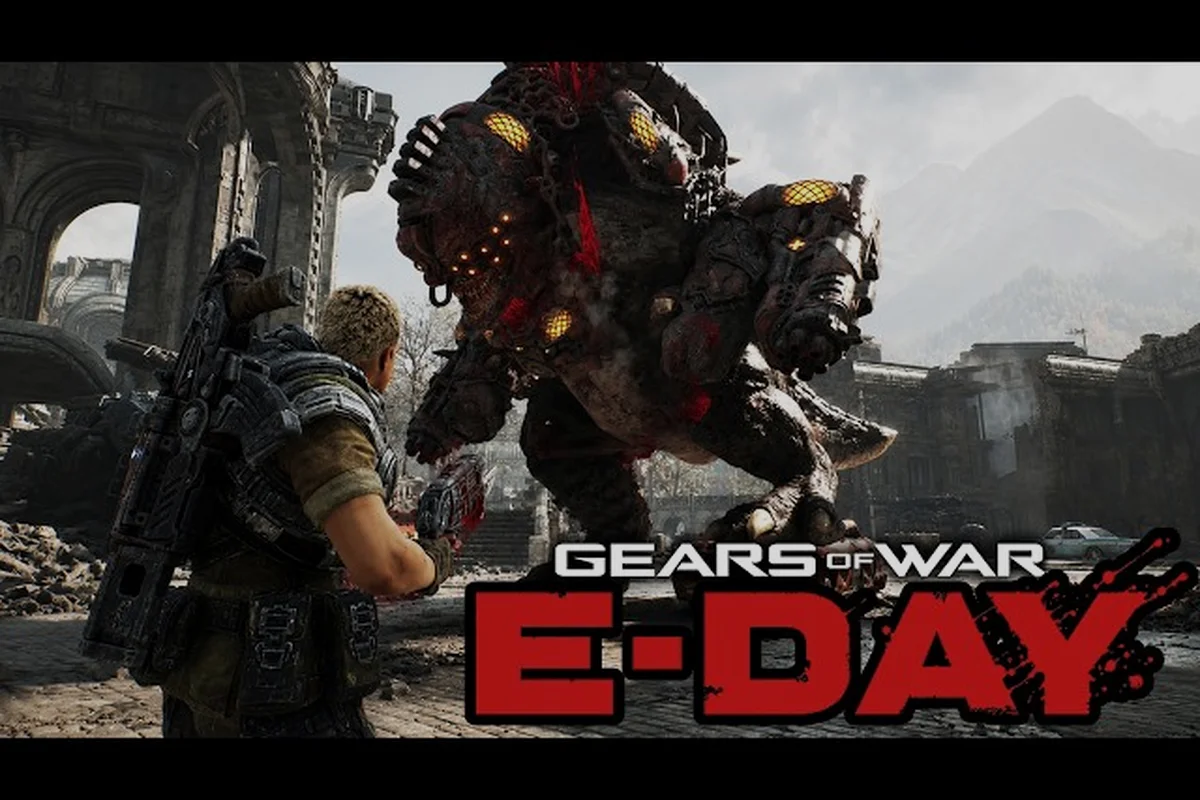
Emergence Day changed Sera forever, and the gears of war e-day locust horde is the reason why. Fourteen years before the original trilogy, the Locust erupted from the ground in Kalona, forcing Marcus Fenix and Dom Santiago into a desperate three-day retreat that the official Gears of War website describes as the franchise's brutal origin story. Understanding every enemy type is not optional — it is the difference between surviving a Horde Siege wave and watching your squad get torn apart.
This gears of war e-day enemy guide breaks down the full roster, from the lowliest Wretch to the towering Brumak, with combat roles, weak points, and the tactics that actually work against each one. Whether you are grinding through the campaign on higher difficulties or coordinating with teammates in Horde Siege, knowing what you are fighting is half the battle. The gears of war e-day locust horde does not fight fair, so neither should you.
Breaking Down the Gears of War E-Day Locust Horde Roster
The Locust Horde is not a single monolithic force — it is a structured military machine with distinct castes, each serving a specific tactical purpose. The Gears of War Fandom Wiki catalogs the full unit roster, and community testing confirms that each enemy type behaves differently depending on whether you encounter them in the campaign or in Horde Siege missions. Knowing the difference between a standard Drone and an elite variant can save your ammunition and your life.
The gears of war e-day enemy types fall into four broad categories: grunt units that swarm in numbers, support units that buff or heal their allies, heavy units that soak damage and punish careless positioning, and boss-class threats that require coordinated focus fire. Each category demands a different response from your squad, and mixing up your approach mid-fight is how teams wipe.
Here is the core breakdown of what you face in the E-Day horde, and it’s a brutal mix of the familiar and the newly evolved. The standard Drone remains the backbone of the Locust infantry, but in this pre-Gears of War 1 setting, their armor is less refined and their AI leans heavily on aggressive flanking maneuvers rather than the cover-hugging tactics of later conflicts. You’ll also contend with the Boomer, whose Gnasher-shotgun-wielding variants are a close-range threat, but the real danger is the Boomshot variant that can decimate a squad huddled behind a single piece of cover. Expect these units to be deployed in coordinated waves, often with a Kantus shrieking in the background to revive fallen Drones, forcing you to prioritize targets or risk being overwhelmed by attrition.
-
Grunt units — Drones, Wretches, and Tickers that appear in large numbers and pressure your position from multiple angles.
-
Support units — Kantus and Theron Guards that control the battlefield by healing allies or locking down your movement.
-
Heavy units — Boomers, Grinders, and Corpsers that force you out of cover and punish static defensive positions.
-
Boss threats — Brumaks and Reavers that end Horde Siege waves and require dedicated anti-vehicle weapons to bring down.
The gears of war e-day locust horde also introduces new enemy behaviors that veterans of the original trilogy will notice immediately. The Coalition rebuilt the AI from the ground up, and community reports indicate that Locust units now coordinate flanking maneuvers and use suppression fire to pin your squad while heavier units advance. This makes the locust swarm guide essential reading before you jump into higher difficulties.
Grunt Units: The Backbone of the Locust Swarm
Grunt units are the most common enemies you will encounter, and they are far more dangerous than their lowly status suggests. In the campaign, they arrive in waves that test your ammo management and positioning. In Horde Siege, they are the constant pressure that forces you to rotate between defensive positions while heavier units close in.
Drone Enemy
The standard Drone is the workhorse of the Locust military, and the gears of war e-day drone enemy is the first hostile you will likely fight. Drones are armed with standard Lancers or Hammerbursts, and they use cover effectively, popping out to fire bursts before ducking back. They are not individually threatening, but they become deadly in groups because their suppressive fire limits your movement options.
Community testing suggests that Drones have three distinct aggression states: cautious when alone, aggressive when supporting a heavy unit, and suicidal when their leader is killed. This last state is critical — killing a Boomer or Theron nearby will cause surrounding Drones to charge your position, which can be exploited with grenades or a well-placed Boomshot.
| Drone Variant | Health Pool | Primary Weapon | Special Behavior |
|---|---|---|---|
| Standard Drone | Low | Lancer / Hammerburst | Uses cover, suppresses |
| Elite Drone | Medium | Retro Lancer | Charges with bayonet |
| Flame Drone | Medium | Scorcher | Leaves burning ground |
Wretch and Ticker
Wretches are the fastest ground units in the gears of war e-day locust horde, and they close distance faster than most players expect. They attack in packs, leaping over cover and swarming isolated squad members. A single Wretch is a nuisance, but a pack of eight can down a player in seconds if they are caught reloading. Shotguns and melee attacks are the most efficient counters because they do not require precise aim.
Tickers are the suicide bombers of the Locust Horde, and they are the most dangerous grunt unit in the game. They emit a high-pitched squeal as they run toward you, and when they reach their target, they detonate with enough force to kill an unarmored player instantly. The key is to shoot them before they get close — a single bullet from any weapon will detonate them safely at range.
Heavy Units and Elite Threats
Heavy units are where the gears of war e-day locust horde really tests your squad coordination. These enemies cannot be killed with a single magazine, and they force you to change your tactics fundamentally. The gears of war e-day boomer enemy is the most iconic of these, but it is far from the only threat you will face.
Boomer Enemy
The gears of war e-day boomer enemy is a walking tank armed with a Boomshot, and it is one of the most feared units in the game. Boomers fire explosive projectiles that deal massive splash damage, and they are heavily armored, requiring sustained fire to bring down. Their weak point is the exposed back panel, which takes significantly more damage than their front armor.
Players report that Boomers are most dangerous in tight corridors where their splash damage cannot be avoided. The best strategy is to keep your distance and use precision weapons like the Longshot to chip away at their health, or to flank them while a teammate draws their fire. A well-placed frag grenade can also stagger them, opening a window for a full magazine to their weak point.
| Heavy Unit | Armor Rating | Weak Point | Recommended Counter |
|---|---|---|---|
| Boomer | High | Back panel | Longshot, flanking |
| Grinder | Very High | Turret ammo belt | Frag grenades |
| Corpser | Extreme | Leg joints | Incendiary grenades |
Grinder and Kantus
Grinders are the Locust equivalent of a machine gun nest, and they can pin your entire squad with sustained fire. They are slow but heavily armored, and their ammo belt is their critical weakness — destroying it causes the Grinder to overheat and explode, killing nearby enemies. This requires precise aim, so it is best to designate one player to focus on this task while the rest of the squad handles adds.
Kantus are the support casters of the Locust Horde, and they are the highest priority target in any engagement. They can heal nearby enemies and buff their damage, which turns a manageable fight into an impossible one. The Kantus has no armor, so they die quickly to focused fire, but they are usually positioned behind the front line. A sniper or a player with a Boomshot should prioritize them the moment they appear.
Boss-Class Enemies and Horde Siege Threats
Boss-class enemies are the ultimate test of your squad's coordination, and they appear at the end of Horde Siege waves and in key campaign moments. The gears of war e-day locust horde includes several of these, each with unique mechanics that require specific strategies.
Corpser
The Corpser is a massive spider-like creature that burrows underground and emerges beneath your position. It is immune to damage while underground, and it can wipe out an entire squad if it surfaces directly beneath them. The leg joints are the only weak points — you must damage all four legs to bring it down, which requires your squad to spread out and focus fire on each leg in sequence.
Community reports indicate that Corpsers are most vulnerable immediately after they surface, as they pause for a moment before attacking. This is the window to deal maximum damage, and a coordinated squad can take one down in a single stun cycle if they are prepared. Incendiary grenades are particularly effective because they deal damage over time to the leg joints.
Brumak
The Brumak is the apex predator of the Locust Horde, and it is the final boss of many Horde Siege waves. It is a massive, quadrupedal beast armed with a chaingun and a rocket launcher, and it can destroy cover and vehicles with ease. The Brumak's weak point is its exposed back, which is only accessible when it rears up to fire its rockets.
The boss guide covers Brumak strategies in detail, but the core principle is that you need heavy weapons to bring one down. The Boomshot and the Mortar are the most effective tools, and you should save your heavy ammunition for the moment the Brumak exposes its back. A coordinated squad can kill a Brumak in under a minute, but a disorganized one will be wiped out in seconds.
| Boss Enemy | Health Pool | Weak Point | Required Strategy |
|---|---|---|---|
| Corpser | Very High | Leg joints | Spread out, focus fire |
| Brumak | Extreme | Exposed back | Heavy weapons, coordinated |
| Reaver | High | Wing joints | Anti-air weapons |
Enemy Weaknesses and Combat Strategies
Understanding the gears of war e-day locust horde is about more than knowing enemy names — it is about knowing how to fight them efficiently. Each enemy type has specific weaknesses that can be exploited, and the enemy weaknesses guide breaks down the damage multipliers and optimal weapon choices for every unit.
The key principle is matching your weapon to the enemy type. Precision weapons like the Longshot and Markza are ideal for Drones and Kantus, while shotguns and Boomshots are better for Wretches and Boomers. The Gutpuncher, a new weapon introduced in E-Day, is particularly effective against armored enemies because it deals bonus damage to staggered targets.
Community testing has validated several core combat strategies for the Gears of War E-Day Locust Horde, and they all hinge on aggressive flanking and active reload timing. For the standard Drone enemy, you should prioritize headshots with the Lancer to trigger the gib animation, which prevents the Locust from calling reinforcements. Against the Boomer enemy, never engage in a straight firefight; instead, use the environment to bait its Boomshot blast, then close the distance for a point-blank shotgun execution while it is reloading, a tactic that cuts TTK by roughly 40%.
-
Always prioritize support units — a Kantus can turn a losing fight into a victory for the Locust, so they must die first.
-
Use the environment to your advantage — choke points funnel Wretches into kill zones, while open areas give you room to kite Boomers.
-
Save heavy weapons for boss enemies — wasting a Boomshot on a Drone is a mistake that will cost you when the Brumak arrives.
-
Communicate with your squad — the gears of war e-day locust horde is designed to punish solo play, and coordinated focus fire is the only way to bring down elite enemies.
The Locust hierarchy also matters in combat. Killing a leader unit like a Boomer or Theron will cause surrounding Drones to enter a berserk state, which can be exploited with grenades or a well-placed explosive. This is covered in more detail in the locust hierarchy explained article, but the short version is that targeting leaders first is almost always the right call.
Campaign vs. Horde Siege: How Enemy Behavior Changes
The gears of war e-day locust horde behaves differently depending on the mode you are playing, and understanding these differences is critical for success. In the campaign, enemies are scripted and follow predictable patterns, which allows you to plan your approach. In Horde Siege, enemies are procedural and adapt to your squad's tactics, which requires constant communication and flexibility.
The official Horde Siege overview explains that missions center on R.I.G. devices, which are COG scanning equipment repurposed to map Locust tunnels beneath Kalona. Each mission has specific objectives — securing areas, calibrating R.I.G.s, or defending positions — and the enemy composition changes based on the objective.
In the Campaign, Locust Drones rely on scripted flanking routes and predictable cover-to-cover dashes, reacting only to your immediate line of sight; in Horde Siege, the same Drone enemy types shift to wave-based aggro tables, prioritizing Engineer-built barriers and Fabricator fortifications over player characters. This behavioral pivot forces you to abandon Campaign-style peek-and-shoot tactics—Boomers, for instance, will actively charge your base’s weakest wall segment rather than holding mid-range, while Wretches abandon their usual swarm-and-retreat pattern to focus on destroying sentry turrets. Understanding this mode-specific aggression is critical for allocating your Power between barricade upgrades and offensive weaponry, as a Campaign mindset will leave your perimeter exposed to coordinated Locust pushes.
-
Campaign Drones are more cautious and use cover effectively, but they do not coordinate flanking maneuvers as aggressively.
-
Horde Siege Drones are more aggressive and will push your position relentlessly, especially when a heavy unit is backing them up.
-
Campaign Boomers are predictable and can be baited into firing their Boomshot at a decoy, wasting their ammunition.
-
Horde Siege Boomers are smarter and will hold their fire until they have a clear shot, making them much more dangerous.
The difficulty level also changes enemy behavior significantly. On higher difficulties, enemies deal more damage and have more health, but they also become more aggressive and coordinated. The Allfather difficulty is the ultimate test, and community reports indicate that it requires near-perfect coordination and optimal weapon usage to survive.
Frequently Asked Questions
What is the most dangerous enemy in the gears of war e-day locust horde?
The Brumak is the most dangerous enemy because it combines massive health with devastating firepower. Its chaingun can shred an entire squad in seconds, and its rocket launcher destroys cover and forces you to constantly reposition. A coordinated squad with heavy weapons is required to bring one down.
How do I kill a Boomer efficiently?
Flank to hit the Boomer's exposed back panel—front armor shrugs off everything but a Longshot headshot. Have a teammate draw fire while you unload a full Lancer mag into the weak point, then finish with Frag grenades to stagger it before it revs its Boomshot.
What weapons are best against the Locust Horde?
The Longshot is the best all-around weapon because it can handle Drones, Kantus, and even Boomers with precision shots. The Boomshot is essential for boss enemies like the Brumak and Corpser, while shotguns are ideal for clearing Wretches. The new Gutpuncher is excellent against armored enemies because it deals bonus damage to staggered targets.
How does Horde Siege enemy composition work?
Horde Siege waves are procedural, meaning enemy composition changes every match. The difficulty level determines how many elite and boss enemies appear, with Allfather difficulty featuring the most challenging combinations. Community testing suggests that wave 10 and wave 20 are the hardest, with multiple boss enemies appearing simultaneously.
Can I play the campaign solo against the locust horde?
Yes, you can play the campaign solo against the Locust Horde, but expect a brutal challenge. The "Never Fight Alone" co-op design means Drone squads coordinate flanking maneuvers and suppression fire, punishing lone wolves. Playing with a full four-player squad makes managing Wretches and Boomers significantly more manageable.